
Sustainability at NOCCCD
NOCCCD continues its commitment to building a district that recognizes the environmental, economic, and social benefits of a sustainable future.
The NOCCCD Board of Trustees adopted BP 3580 Sustainability Plan in May 2021. In addition to recognizing environmental sustainability to be a foundational mission for NOCCCD, the Policy directed the Chancellor, or designee, to take two key actions:
- Establish administrative procedures for sustainable practices of NOCCCD campuses in the areas of academics, student engagement, planning and administration, and operations
- Continue to evaluate a Sustainability Plan that aims to monitor and achieve ongoing sustainability goals
The administrative procedure AP 3580 Environmental Sustainability adopted in February 2022 provides districtwide guidelines for implementing environmental sustainability. AP 3580 references the 2019 California Community Colleges Board of Governors Sustainability Policy, the Association for the Advancement of Sustainability in Higher Education Sustainability Tracking, Assessment, and Rating System (STARS), and the United Nations Sustainable Development Goals (UNSDGs).
The District Sustainability Action Plan (SAP) sets the guiding principles for the District’s current sustainability vision to include priorities for wellness, mental health, and resilience of the campus community by defining a comprehensive approach that all the campuses may follow. This plan was created with a full engagement of constituents represented by students, faculty, and staff.
District Resources
The District-wide Sustainability Workgroup is comprised of representatives from the three campus-level Sustainability Committees and Facilities representatives. The workgroup's serves to solve challenges addressed in the District Sustainability Action Plan through collaboration and sharing of collective knowledge.
This Summer 2026, the workgroup will be focusing on Objective 2.3: Ecology & Biodiversity of the District Sustainability Action Plan. Within the first two years, this project expects to address the following actionable items:
- District-wide Landscape Guidelines
- Develop and share a District-wide approved landscape planting list based on Cypress’s existing Landscape Guidelines, that prioritizes species that are hardy, native, indigenous, low-water consumptive, drought resistant, and low-maintenance.
- Variance Request Process
- Adopt a Variance Request process, in accordance with Cypress’s Landscape Guidelines, across all campuses for proposed additions to the approved plant list
- Plants for Pollinators and Endagered Species
- Identify and prioritize species that provide habitat for pollinators, wildlife, and endangered species by working with Horticulture Departments across campuses.
- Update the District-wide Landscape Guidelines to better incorporate and highlight these species (See California Native Plant Society, Orange County pollinator plant list, and Orange County bird-friendly plant list).
- Environmental Assessments
- Conduct an assessment to identify: (1) Endangered and vulnerable species with habitats on
land owned or managed by the institution; and/or (2) areas of biodiversity importance on land owned or
managed by institution
- Conduct an assessment to identify: (1) Endangered and vulnerable species with habitats on
The Sustainability Tracking, Assessment & Rating System (STARS) is a transparent, self-reporting framework for colleges and universities to measure their sustainability performance.
STARS is intended to engage and recognize the full spectrum of higher education institutions, from community colleges to research universities. It encompasses long-term sustainability goals for already high-achieving institutions, as well as entry points of recognition for institutions that are taking first steps toward sustainability. STARS is designed to:
- Provide a framework for understanding sustainability in all sectors of higher education
- Enable meaningful comparisons over time and across institutions using a common set of measurements developed with broad participation from the international campus sustainability community
- Create incentives for continual improvement toward sustainability
- Facilitate information sharing about higher education sustainability practices and performance
- Build a stronger, more diverse campus sustainability community
| Campus | STARS Report |
|---|---|
| Fullerton College |  |
District Sustainability is currently developing a 2025-26 Greenhouse Gas Inventory that aligns with the benchmark goals delineated in the Board of Governors' 2025 Climate Action and Sustainability Goals.
Scope 1 Emissions: Natural Gas
- Fleet vehicle gasoline and diesel usage
- Generators
- Refrigerants
- CO2 fire suppression systems
- Gas lawn equipment
Scope 2 Emissions: Purchased Electricity
Scope 3 Emissions: Commute
- Travel reimbursements (car or plane)
- Staff and student commuting
- Waste
- Purchased goods
Quarterly Sustainability Reports
NOCCCD Sustainability Director Updates: Summer 2026
The District Sustainability department shares updates as of July 2026.
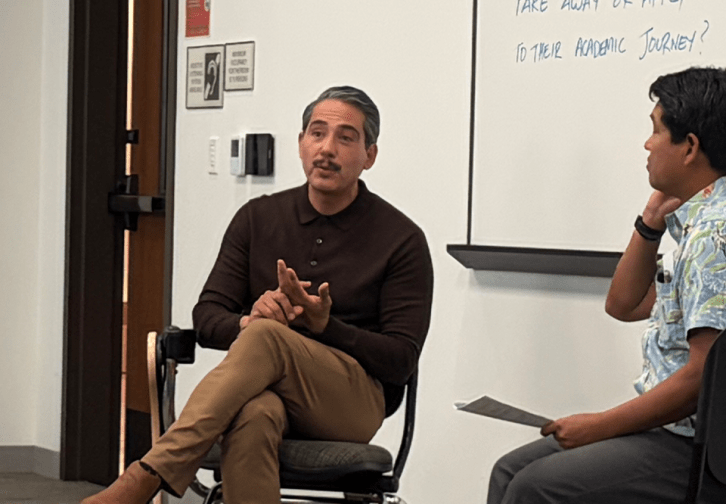
NOCCCD Sustainability Director Updates: Earth Day Edition! (Spring 2026)
The District Sustainability department shares updates as of April 2026.
NOCCCD Sustainability Director Updates as of January 2026
The District Sustainability department shares updates as of January 2026.
On-site Energy Generation
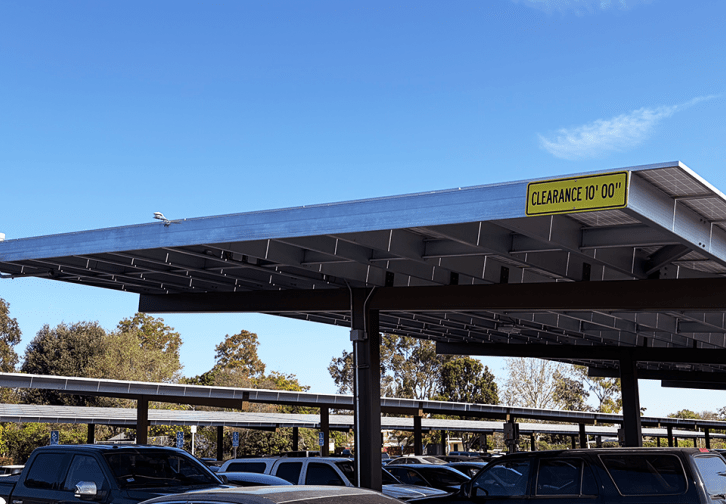
Fullerton College's solar system was installed and energized in May of 2025. The system, located in Lot 5 north of Sherbeck Field, is estimated to produce 1,708,526 kWh by the end of its first full year of operation, with an expected lifetime production of over 32 million kWh. This is around 13% of the college's annual electricity consumption based on campus energy demands in 2025, or roughly the same as the 800 Building and 400 Building combined.
kWh Generated to date
Triple Bottom Line Sustainability
As the impacts of climate change become more widespread and severe, NOCCCD will adopt guidelines that help the District make strategic and informed decisions that can balance environmental sustainability with fiscal and operational feasibility. The principle of triple bottom line sustainability states that people, planet, and profit must be equally considered by an organization and that no significant investment decision can be made without careful consideration of its impacts on each of these essential systems.

Social
Social sustainability means respecting and sustaining cultures, social systems, and human wellbeing worldwide. Community resilience is built through strong connections, shared values, and the protection of human health and well-being for all—decisions made at NOCCCD impact the local community and neighboring communities. NOCCCD policies, practices, and initiatives play a role in creating a more socially vibrant and just world.
Environmental
Environmental sustainability encompasses ecological systems and the natural resources required to sustain them. NOCCCD has committed to reducing resource use and encouraging environmental stewardship through its commitment to eliminate greenhouse gas (GHG) emissions by 2035.

Economic
Economic sustainability requires decision-making principles that lead us to sustain our financial resources without negatively impacting environmental or social systems. Community colleges, including NOCCCD, play a vital role in supporting economic systems that produce goods and services essential to sustainable development.
Chancellor's Office Climate Action and Sustainability Goals
The governor-appointed Board of Governors of the California Community Colleges sets policy and provides guidance on a wide range of state priorities, including how to comply with the state’s environmental statutes, such as Executive Order B-18-12 which outlines California’s climate policy leadership.
Since 2013, the Board of Governors has issued policy directives to guide energy conservation, climate action and sustainability measures. In 2019, they concluded that climate change is one of the most pressing and critical issues of our time and adopted the Climate Change and Sustainability Policy. More recently, the Board of Governors issued the Climate Action and Sustainability Framework as part of the Vision 2030 roadmap. The framework provides revised goals and recommendations for community college districts across the state. This comprehensive set of targets, tools, and goals serves as a guiding resource for NOCCCD. It outlines considerations for advancements in campus sustainability efforts by focus area, including Greenhouse Gas (GHG) Emissions Reduction, Green Buildings, Energy, Water, Waste, Purchasing and Procurement, Transportation, and Food Systems.
Sustainability at Fullerton College
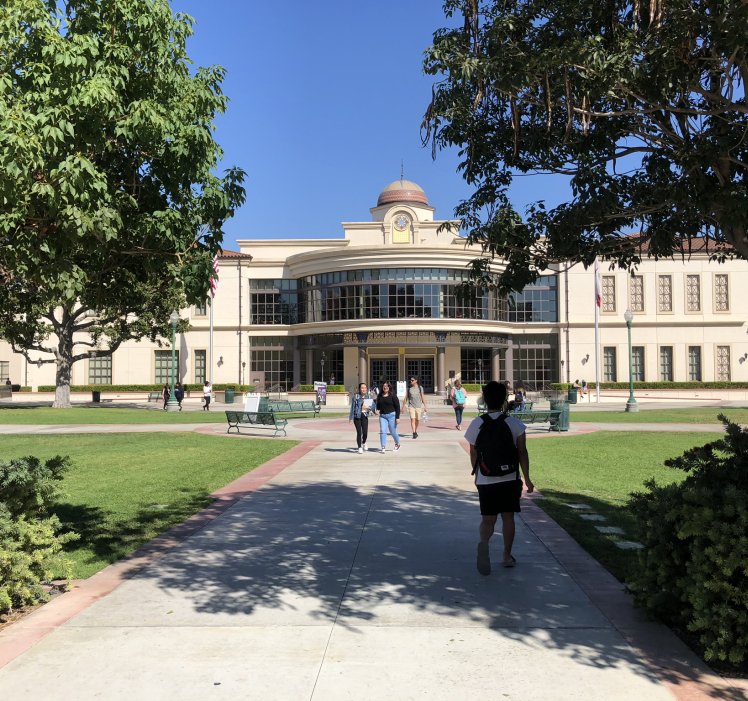
Of the three campuses, Fullerton College is furthest in the development of sustainability initiatives. It is the only campus to have dedicated on-site staff supporting sustainability culture and aligned campus initiatives, in partnership with the Sustainability Committee and the Associated Student Committee on Environmental Sustainability. The 2023-2026 Fullerton Campus Sustainability Plan was created by the Director of Sustainability with support from workgroups focused on Operations, Education and Training, Campus and Community Engagement, and Planning and Administration.
Culturally, promotion of student equity and wellbeing is an important driver for the college, per the 2022 Anti-Racism Research Project, in alignment with the NOCCCD Sustainability Policy and AP 3580. This follows state recommendations to expand the definition of basic needs in higher education, per the 2020 California Homeless Youth Project.
Sustainability at Cypress College
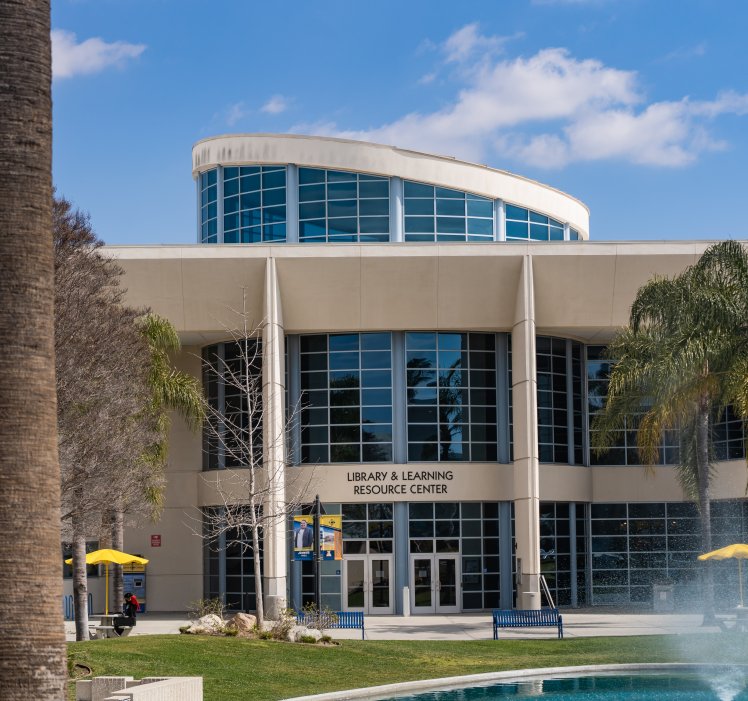
Recent advocacy for sustainability at Cypress College is led by the Cypress College Wellness Collaborative and Sustainability Committee, which hosts events and activities that bring social justice to the forefront of considerations for the climate movement.
Cypress College was honored with a 2019 Excellence in Energy and Sustainability award in January 2019 at the California Community Colleges Board of Governors meeting in Sacramento. The college and the North Orange County Community College District were recognized for Cypress College’s chilled water thermal energy storage tank, which reduces cost and increases energy efficiency.
Additional efforts have included a recently launched mobile app, developed by Cypress College students, that focuses on providing the campus community with sustainable and resilient resources to support basic needs.

Sustainability at NOCE
Advocacy for sustainability at NOCE is led by the Anaheim Campus Sustainability Committee with representation from both NOCE and District staff. Since NOCE and NOCCCD share the Anaheim Campus, collaboration between stakeholders from both entities is crucial for effectively promoting sustainability practices and driving meaningful change throughout the campus. The committee’s responsibility includes planning, implementing, coordinating, and monitoring sustainability initiatives and promoting a more environmentally conscious campus environment.
Sustainability Projects
LLRC Exterior Patio Design
The District's Sustainability Action Plan (SAP) sets goals to improve spaces and structures for student and staff wellbeing. The suggestions include cultivating community gathering spaces, green outdoor spaces with shade, and supporting areas for mental health reprieves.
The Library & Learning Resource Center (LLRC) Exterior Patio is a Measure J project that will create areas for student use and campus events.
Construction is estimated to begin in Fall 2026. The target completion date is May 2027.
Exterior Green Community Space Enhancement
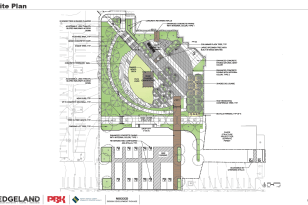
The Exterior Green Community Space Enhancement is another Measure J project that supports goals specified in the District SAP. This greenspace will foster social gatherings in a grand quad with amphitheater seating for special events like commencement. ADA improvements are included in the project scope of work for accessibility to all users.
Local funds also support the development of this project in addition to Measure J.
Construction is estimated to begin in February 2026, with a target completion date of January 2027.